Noticing Safety: Alternative Therapy for Sensory Difficulties with Steeds
I initially watched a youngster settle right into quiet close to a steed on a gusty springtime afternoon. The field tarp waved, a sound that normally sent him dashing for the leave. That day he pushed a palm to the gelding's shoulder, matched the surge of his breath, then searched for and stated, "I can manage it." That sentence was not concerning the tarpaulin. It was about having a body that often shrieked as well loud, and finding a living metronome that provided solidity without words.
Horses invite a various conversation concerning sensation. They are big, cozy, balanced, and receptive, and those high qualities incorporate into a based method to check out sound, texture, movement, and social signs. When prepared by trained experts, equine-assisted solutions can be a safe, reliable option for individuals dealing with sensory processing distinctions, stress and anxiety, ADHD, or autism, as well as for groups looking for calmer interaction in demanding environments.
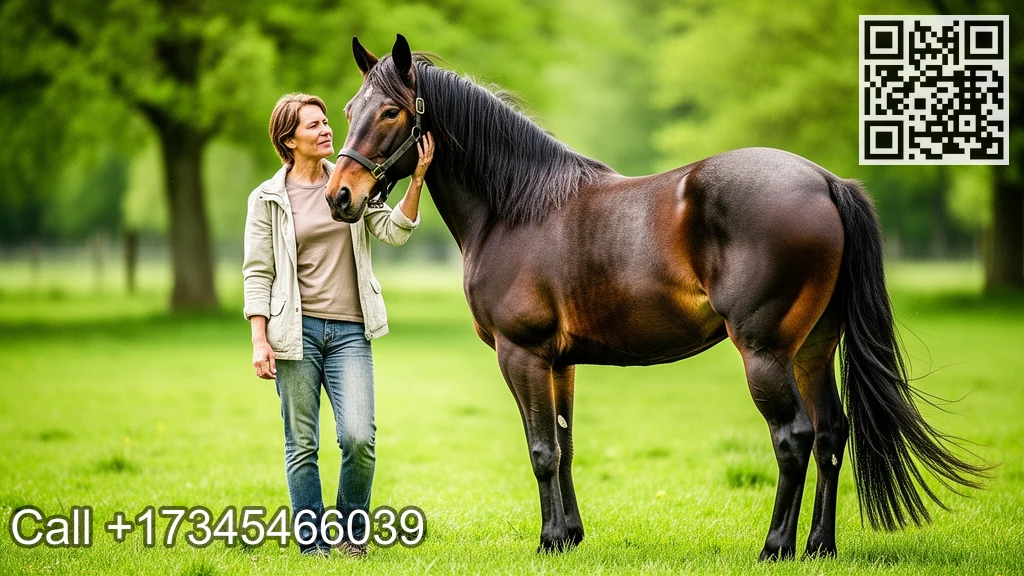
This is a within take a look at how restorative horsemanship and equine-facilitated health produce space for policy, learning, and confidence. You will certainly locate no wonder asserts here. The horses do refrain from doing the help us. They make the job possible.
What makes horses such potent companions for sensory challenges
An equine checks out the world with sensation. Skin twitches at a fly, ears scan independently for sound, hooves really feel the ground with accuracy. Their nerve systems are tuned for survival, which additionally suggests they detect physiological changes in others at tremendously great levels. In method, this sensitivity becomes biofeedback you can touch.
The heat of a steed's body and the guide of the walk frequently develop an organizing rhythm. A lot of equines move at around 80 to 110 steps per min at a comfy walk. That cadence is close to a controlled human resting heart rate and tends to soothe rather than jolt. For several customers, the feeling of a breathing, foreseeable partner is easier to refine than the man-made buzz of a clinic waiting room or a gymnasium packed with echoes.
Horses use clear, prompt repercussions without shame. Step into an equine's room with too much force, and the equine moves away. Breathe, soften your shoulders, and the horse leans back in. It is relational responses that maps straight to self-awareness. This is why equine-assisted activities can be powerful for anxiousness assistance with equines in addition to for ADHD equine finding out support. Interest and feeling appear in the steed's habits, then become discussable without pointing a finger.
What equine-assisted solutions consist of, and what they do not
The field makes use of overlapping terms, which can puzzle households and referrers. In wide strokes:
- Therapeutic horsemanship typically implies flexible riding and foundation under a credentialed trainer that customizes activities to satisfy specific objectives. Assume equilibrium, sychronisation, interaction, and confidence with installed and unmounted tasks.
- Equine-assisted solutions is the umbrella, covering equine-assisted coaching, mental health and wellness sessions with licensed clinicians, physical or occupational therapy on horseback, and equine-facilitated wellness programs that focus on resilience and stress management.
- Experiential learning with horses frequently shows up in school partnerships, management programs, or team building with steeds. These are usually unmounted and emphasize interaction, analytical, and team regulation.
These solutions are not replacements for dilemma care or extensive behavioral treatment. They enhance existing assistances. A regular 45 to 60 minute session can enhance sensory approaches from work therapy, turn dealing plans into symbolized method, and give a readying Happy Hooves Wellness ADHD equine learning support to evaluate social skills with truthful comments from a 1,000 pound teacher.
A day in the arena: sensory-first planning
A well-run session really feels stealthily simple. Underneath is a choreography of security, sensory scaffolding, and choice. When I build a plan for a new customer with alternative therapy for sensory difficulties in mind, I start with three anchors: predictable framework, rated input, and consent.
Predictable framework starts the minute feet struck gravel. Lots of clients like a low-stimulus course to the barn and a peaceful grooming location rather than the main aisle. We maintain the illumination stable, avoid strong aromas, and make use of soft brushes prior to rigid ones. Safety helmets are fitted by a trained staffer with slow-moving hands and a running story: "I'm lifting the band, you can tell me if it really feels scratchy."
Graded input indicates we titrate sensation the means you would come close to a chilly ocean, detailed. Groundwork comes before riding, strolling close to the horse to feel his footfalls. If installing is appropriate, we utilize a block to decrease the feeling of dropping up a wall surface. We start with brief, straight lines at a stroll before turns or adjustments in speed. When somebody shows indications of flooding, we stop briefly and go back to hand on withers, match the breath, back to yes.
Consent is both honest and useful. It reduces fight-flight, constructs trust, and shows an internal signal for stop and go. We use clear invitations: "Would you like to try leading from the shoulder or staying by the hip?" "Are you all right with the steed moving more detailed?" The equine's consent matters as well. If the steed pins ears during grooming, licks and chews, or changes away continuously, we treat that as info. We can adjust tools, swap equines, or take a sensory break with a hay web and distance.
Here is a regular 55 minute session circulation for a customer working with sensory inflection and self-advocacy:
- Arrival and law check: 5 to 7 minutes to clear up, orient to the steed's area, pick a brush or rope that feels great in the hand.
- Connection on the ground: 10 to 15 minutes of leading via basic patterns, exercising pace matching and spatial boundaries with visual cones rather than spoken corrections.
- Mounted or deep-pressure activity: 10 to 15 mins, in some cases bareback pad for even more warmth and proprioception, in some cases a surcingle take care of for security. If installed is not appropriate, we replicate with a heavy pad or stress from a treatment sphere versus the steed's shoulder.
- Integration game: 10 mins, such as ring throw at a walk, target sticks, or a scavenger course that prompts look-listen-feel.
- Cooldown and language: 8 to 10 mins grooming or hand grazing, identifying sensations and selections made, finishing with a specific success the client can name and own.
Notice that the time on the horse is frequently the tiniest slice. The work is not about riding abilities for their very own sake. It has to do with developing a nervous system that can see, choose, and recover.
Safety and threat: real talk without drama
Horses allow, even the kind ones. Liable programs keep occurrence prices low with training and split safeguards. I anticipate to see team certified in restorative horsemanship direction, headgears for all bikers, and a society where anybody can call a stop. For clients with seizure background, brittle bones, current blasts, or unrestrained actions that consist of hitting or biting, placed work may be contraindicated. Unmounted equine-assisted activities can still provide rich discovering with fewer risks.
We match equine to customer with intention. For an individual conscious abrupt noise, a younger, looky horse can be overwhelming. For someone hypo-responsive to input who looks for huge experience, a round, swinging-backed draft cross may be just right. We think about height at the withers, width of barrel, brushing tolerance, and herd temperament. The quietest horse in the barn is not constantly the best educator. The appropriate equine is the one whose responses the customer can refine without shutting down.
Equipment matters. A properly fitted helmet is non-negotiable for placed work. We avoid loosened jacket cords, dangling jewelry, and scratchy materials that distract. For clients who like pressure, a tight safety vest can be calming. For clients that dislike responsive surprises, we prep the equine's coat so there are no flakes or burrs to trigger an outburst midway through grooming.
Emergency planning is not a jinx. It is compassion. Staff rehearse dismounts, understand clinical info, and maintain clear courses to departures. If a thunderstorm rolls in, we switch to the indoor arena or relocate to unmounted tasks under a roof. When weather or footing is undecided, we do not push it.
What the job actually changes
Families ask what results to expect and just how fast. Here is the pattern I see usually throughout ages 6 to 60, when customers participate in weekly for 8 to 12 weeks:
- More accurate interoception, those internal signals that state starving, exhausted, stressful, or calm. Individuals start to call states and intervene earlier.
- Reduced startle and improved healing. The field has plenty of tiny shocks. Learning to orient, take a breath, and continue becomes automated over time.
- Clearer boundaries. Horses are ruthless instructors of area. Customers generalise this to peers, brother or sisters, and coworkers.
- Better interest switching. Leading a horse around a cone path calls for looking ahead while feeling the line, while keeping an eye on rate and breathing. That mild juggling mirrors class and office demands in a nonjudgmental setting.
- Confidence built on capability. Not "You're so endure," but "You saw the horse's ear flick and moved your hand. He picked to follow you."
The study base around equine-assisted services has actually grown, especially for autism equine discovering programs and trauma-focused work, although it is not uniform. Some studies show tiny to tool renovations in social interaction, irritation, and flexible behaviors. Others show no substantial distinction compared to regulate activities. From the practitioner side, the greatest gains come when equine sessions are integrated with existing therapies, not siloed. For example, a physical therapist might set a sensory diet plan that we convert into barn jobs, and a college group may mirror our cueing approaches in the classroom.
Stories from the rail
M., age 9, included a diagnosis of autism and a long checklist of audio hostilities. Fallen leave blowers, alarms, the buzz of fluorescent lights could unwind a day. He satisfied Cricket, a steady mare with a reduced, swinging walk. We played a straightforward "quit and pay attention" video game around the arena. When the tractor clanked in the distance, M. Reached down and grabbed a chunk of mane. He closed his eyes and counted to 4 on the inhale, six on the exhale, then released. By week 6, his mother reported that he made use of the same breath in the house when the equine assisted learning neighbor mowed. The lawn mower did not come to be a pal, however it shed its power to damage dinner.
S., a 32 years of age paramedic, came for equine-facilitated wellness to service stress and anxiety and sleep. Mounted work was not component of her strategy. We hung out with 2 horses in a tiny pasture and exercised co-regulation. S. Observed that if she scrolled her phone while standing near the fence, the horses drifted away. When she filched the phone, softened her upper body, and allow her eyes widen instead of narrow, they walked back. It took three sessions for her to recognize the shoulders-forward, tunnel-vision pose that she performed her entire change. She began to change that habit in the field, and her team reported fewer sharp words on long nights.
R., 14, with ADHD, threw power into every little thing. Halters flew, lead ropes snapped tight, and equines avoided him. We mounted a challenge: can you lead 2 cones apart without touching the rope, utilizing only your feet and breath? He failed 5 times. On the 6th, he murmured "stroll with me," and the horse matched him. That minute equated right into a prepare for transitions at college: quit, anchor feet, breathe in, exhale, move. His educators started using "stroll with me" as a hint. It is hard to suggest with a method that came from a thousand pound animal accepting follow your lead.
Somatic recovery with equines: what that expression truly means
Somatic healing with steeds can appear grand if you visualize magical changes. The truth is quieter. We use the body as a primary website of learning since equine and human communication resides in breath, posture, and micro-movements. An equine-facilitated mentoring session may include observing where stress and anxiety beings in the breast while standing near an interested gelding, after that trying out a shoulder decrease and a longer breathe out to see if the horse selects to remain. The horse's reaction gives real-time information, and the client has a personified memory to contact later.
This physical-first language aids individuals who struggle to gain access to words under tension. It likewise aids those who have actually learned to override their body's signals to please others. The arena awards sincerity. If your hands tremble, the horse tells you. If you fake calmness, the horse tells you. Over time, the responses loophole constructs tolerance for experience and the abilities to modulate it, which is the heart of alternate therapy for sensory challenges.
Coaching, counseling, and riding: selecting the ideal doorway
Equine-assisted mentoring concentrates on objectives and ahead movement: management, communication, strength. It can be specific or team based, and it often appears in corporate or community settings. Team building with horses offers colleagues a shared, novel task that subjects exactly how they handle anxiety with each other. I have actually viewed a supervisor discover more about delegation in one 90 min rounding up exercise than in a month of memos.
Equine-assisted activities and adaptive riding are excellent when sensorimotor objectives issue: balance, trunk control, sequencing, and complying with directions. If a client will benefit from the rhythmic activity of the steed to arrange the nerve system, placed work under a certified trainer deserves exploring.
Equine-assisted services delivered by a mental health professional are most ideal when injury, state of mind problems, or complicated anxiousness are central. The clinician guides psychological processing with the equine as co-facilitator. Sessions might remain unmounted to reduce arousal and make best use of relational learning.
The doorway issues less than the high quality of the program and the clarity of your goals. Lots of barns mix offerings. What you want is a group that pays attention, connects with your various other suppliers, and tracks end results in greater than cozy fuzzies.
The logistics households and groups ask about
Access and price vary with region. In my area, a private-pay adaptive riding lesson runs 60 to 100 bucks per session, with scholarship funds covering 10 to half for qualifying family members. Mental health sessions with a certified medical professional typically cost 120 to 180 dollars. Some insurance policy plans repay when solutions are billed under work or physical treatment with correct coding. Waiting listings can be long. Putting your name down early and remaining versatile on days helps.
Programs with interior sectors can operate year-round. Outdoor-only websites usually run March with November, then shift to unmounted wintertime programming. Strategy in advance for footwear and garments. Closed-toe footwear with a little heel, layers without dangling strings, gloves for cool early mornings. For customers with responsive defensiveness, bring a known-soft base layer so we do not fight the feel of a brand-new tee shirt and a new environment at once.
Herd option is not arbitrary. A program steed string normally includes steady older people, a few middle-aged educators that ask for accuracy, and one or two younger potential customers in training that just deal with sophisticated customers. Horses are not immediately much easier. Some hate being combed greater than big equines do. Draft crosses typically endure sound and uniqueness better than fine-boned breeds, but the fit depends on personality, not just type.
How we readjust for particular profiles
For autism equine learning programs, predictability is the top priority. Aesthetic routines at the arena gate, regular brushing stations, and repeated patterns minimize cognitive tons. We manuscript social assumptions in straightforward expressions: "Ask, wait, view." We maintain goals small and details: touch 3 body parts with a soft brush, lead to the letter B, stop with both feet still for 3 seconds. Success constructs momentum.
For ADHD equine learning assistance, motion is not the enemy. We offer the body a job. Bring a pole, matter strides out loud, toss a ring at every third cone. We form impulse control with instant, all-natural effects. If you rush under the equine's neck, the session stops briefly. If you see need and step back, you make a new challenge. Focus increases when the job matters and the comments is clear.
For anxiety support with horses, we resolve anticipatory fear. We established direct exposures that really feel picked and titrated. Stroll near a steed with a fencing between you. Development to brushing with a second person holding the halter. Think about installed work only when curiosity edges out dread. We teach abilities in the peaceful times, not at the elevation of panic: box breathing, orienting to four edges of the sector, naming 5 colors in the space.
For sensory looking for accounts, we add deep stress options that remain secure for the steed: leaning forearms into the withers rather than full-body hugs, curtaining a heavy pad throughout the lap while installed, pressing a shoulder into a hay bundle. For sensory avoidant accounts, we use devices that lower intensity: soft curry mitts, range touch with a lengthy stick, or grooming via a towel obstacle till resistance grows.
When it does not function, and what we do next
Equine-assisted offerings are not a remedy. In some cases the barn is simply too much. The dust, the birds, the means audio bounces in a metal sector, the odor of manure. Some customers can not access learning due to the fact that their standard anxiety is overpriced. Others are tired by the slow rate and choose basketball or dancing. If we do not see signs of engagement by the fourth session, I call a conference. We examine goals, attempt a different equine or setting, or we stop solutions and refer out. Preserving a feeling of choice and dignity beats clinging to a method that does not fit.
On the other side, success can produce stress to do more, quicker. A youngster who finds out to trot without hands may ask to canter not really prepared. A group that bonds over a rounded pen challenge might want to bring 30 people following time, frustrating the herd. Part of our job is to hold a thoughtful speed. The nerves finds out in increments. We let development clear up, after that stretch again.
Integrating the barn with daily life
The actual value turns up in between sessions. We develop easy bridges. An image of the steed's curious ear ends up being a phone wallpaper sign to soften your shoulders. A lead rope clip in a knapsack pocket advises a pupil to examine pace in the hallway. A team takes on a common expression from the sector, like "clear the cone," to imply strategy your path before you speak.
Families typically report adjustments in shifts in your home. The pre-dinner meltdown changes when the regular includes 3 mins of outdoors walking matched to the steed's rhythm. Rest improves when a child uses "withers breath" - a hand on their very own breast, a matter of 4 in and 6 out, the way they practiced on a cozy shoulder. Coworkers find that a 90 2nd reset at the photocopier, feet grounded and eyes soft, avoids a blow-up at 3 p.m.
A quick checklist for picking a high quality program
- Qualified staff: Look for trainers accredited in healing horsemanship, accredited medical professionals for psychological health solutions, and ongoing training documented.
- Safety society: Safety helmets for placed job, clear emergency situation plans, horse well-being prioritized over schedules.
- Collaboration: Will certainly they talk with your OT, institution group, or specialist and line up goals?
- Horse fit: Range of equines, honest discussion of why a particular equine is picked for you.
- Outcome tracking: Concrete goals, session notes you can understand, and normal progression reviews.
Cost-benefit judgment and honest care
Every supportive solution asks family members and organizations to evaluate money, time, effort, and return. If you drive 40 mins to the barn and the gains just show up in the arena, it is not nearly enough. We aim for generalization right into school, work, sleep, and connections. That is why we maintain the objectives useful and ask you to exercise at home.
Ethically, we owe steeds an excellent life. They are not tools. Programs that value the herd established fair workloads, turn rest days, keep herds in social groups with turnout, and retire equines beautifully. Customers learn what it means to look after a partner: brushing in the past and after, seeing pain, asking for and recognizing permission. That is part of the healing. Feeling powerful without subduing is an ability that changes exactly how we relocate via the remainder of the world.
Final ideas from the gravel path
The barn is not magic. It is sincere. Equines show the state we bring, after that wait on our following action. For people whose senses misfire or overwhelm, that waiting is a gift. It gives time to see a breath, change a hand, make a various option. Over weeks, those tiny selections construct right into a body that trust funds itself more frequently. That does not eliminate difficulties. It broadens the home window whereby an individual can satisfy them.
If you are taking into consideration equine-facilitated coaching for leadership stress and anxiety, therapeutic horsemanship for your child's control and confidence, or equine-assisted services as an accessory to therapy, begin with a conversation at a reliable barn. Ask to enjoy a session. Walk the fence line at sundown and listen to the herd take a breath. You will understand, within a short time, whether this is the right place to practice feeling safe in your very own skin. And if it is, the job that adheres to will certainly be constant, specific, and real, the kind that holds up outside the sector gate.
Happy Hooves Wellness
9177 Gross Rd, Dexter, MI 48130
+17345466039
https://www.hhooves.com/